Saryu Orchards
Vol. I · Season 2026–27
№ 1 / 13 chapters · rev. 20 Apr 2026
Volume I · Season 2026–27 · Basti, Uttar Pradesh

A four-acre orchard
on the plains of Ayodhya

Twenty-two heritage mangoes in a walking garden, an Israeli high-density block of four flagship varieties, and the working notebook that binds them together.

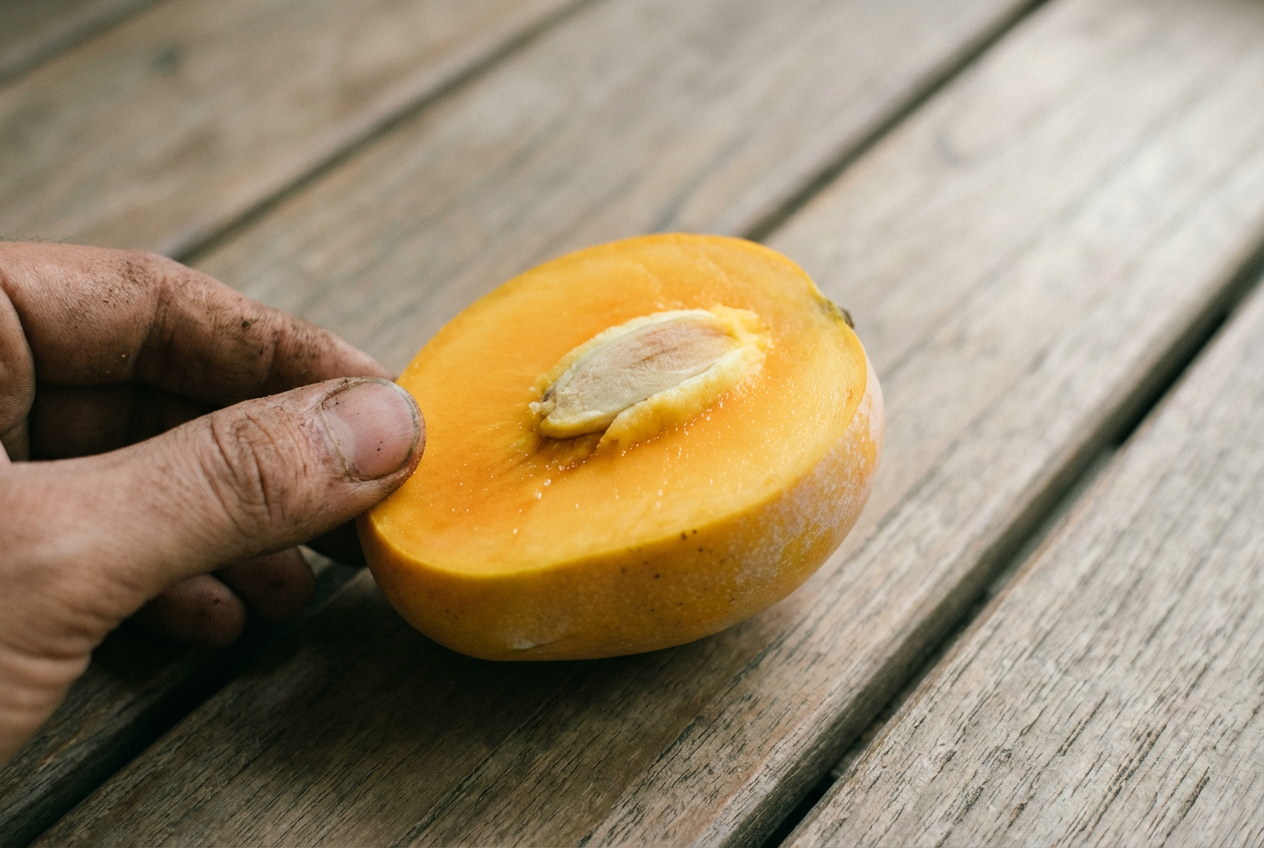
A half-cut Gaurjeet mango on planked teak, saffron flesh facing the camera, soft north-window light
Cover plate · Gaurjeet, cross-section · Basti, April 2026
01of 13
Chapter one · Overview

What this orchard is, and what it isn't.

Not a farm — an estate. Not a factory — a working archive. Not a pitch — a living periodical about the slow wonder of building something that fruits.

Four acres of bare alluvium outside Basti, sixteen kilometres from the Indo-Israel Centre of Excellence for Mango at Banjariya, eighty kilometres west of Gorakhpur. A tubewell, a family on-site, a river half a day away. First sapling planted July 2027, first light harvest 2030, first full harvest 2031, steady state from 2032 onward. A two-zone design: a heritage garden of twenty-two rare and historical Indian varieties, walked through by visitors; and a precision block of four flagship varieties planted at ultra-high density under Israeli-drip technique — the half that funds the brand the other half builds.

This site is the working record. The team opens it to remember — a sourcing address, a graft date, a subsidy deadline, a PBZ dose. It is written to be beautiful because we will be reading it for a decade. And because a document you enjoy is a document you keep current.

The Atelier half (chapters 1–12) holds research, plans, numbers, sources. The Kisan Pathshala (chapter 13) is the visual how-to — the part that becomes video, with our own voice, for the farmer who comes to learn.

Land
4acres
Trees at maturity
1,450total
Heritage varieties
22
UHDP block
2.0acres
First harvest
2030
Steady-state revenue
₹60–90lakh / yr
Capex (18 mo)
₹55–75lakh
Distance to CoE
16km
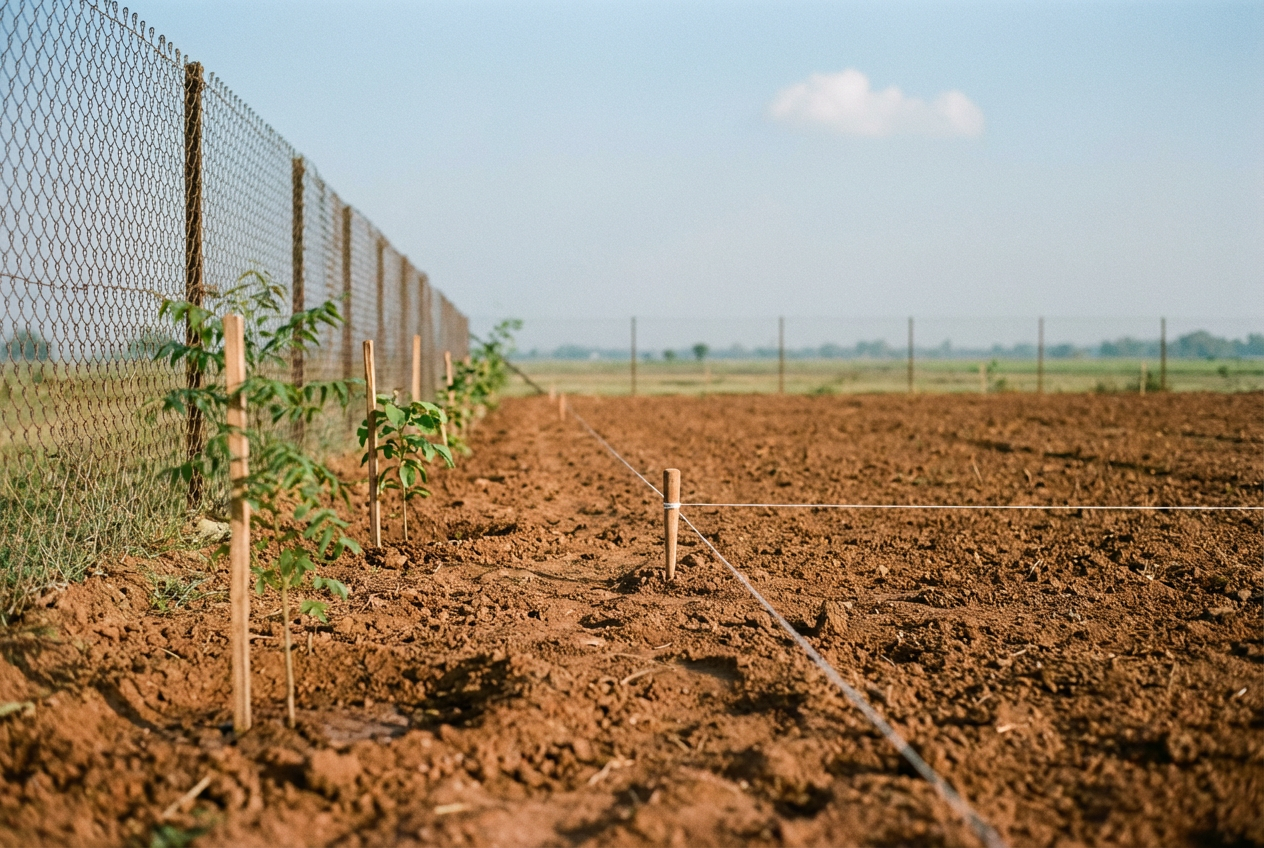
Bare alluvial plot with young windbreak saplings staked at the perimeter
Plate 2.0 · The plot before the orchard. Saryu plains, perimeter windbreak newly staked
02of 13
Chapter two · Site & Layout

The plot, zoned.

A rectangular plot of four acres. A tubewell near the northern edge. One road frontage. Three designed zones and a working back.

Visitors enter through a gate at the road frontage and are drawn through the Heritage Garden — 1.5 acres of twenty-two varieties planted on traditional 10 × 10 metre spacing, with stone markers and labelled pathways — before reaching the Precision Block, 2.0 acres of ultra-high-density planting at 3 × 2 metres, ~670 trees per acre. Between them and at the far end of the plot: a pavilion for tasting, a packhouse for grading, a small processing shed, and a farmhouse. A pond at the lowest corner. A mixed windbreak of sheesham, neem and mahua around the perimeter.

WINDBREAK · SHEESHAM · NEEM · MAHUA Entry · Pavilion · Parking — 0.25 acre TASTING ROOM · WASHROOMS · SIGNAGE Heritage Garden 1.5 ACRES · 22 VARIETIES × 5 TREES · 10 × 10 m SPACING · 110 TREES Precision Block · UHDP 2.0 ACRES · 4 VARIETIES · 3 × 2 m SPACING · ~1,340 TREES Packhouse · Processing · Farmhouse — 0.25 acre Water-harvest Pond · 400 sqm HDPE-LINED · ~600,000 L BUFFER N

Figure 2.1 · Plot plan, schematic · not to scale · north at top

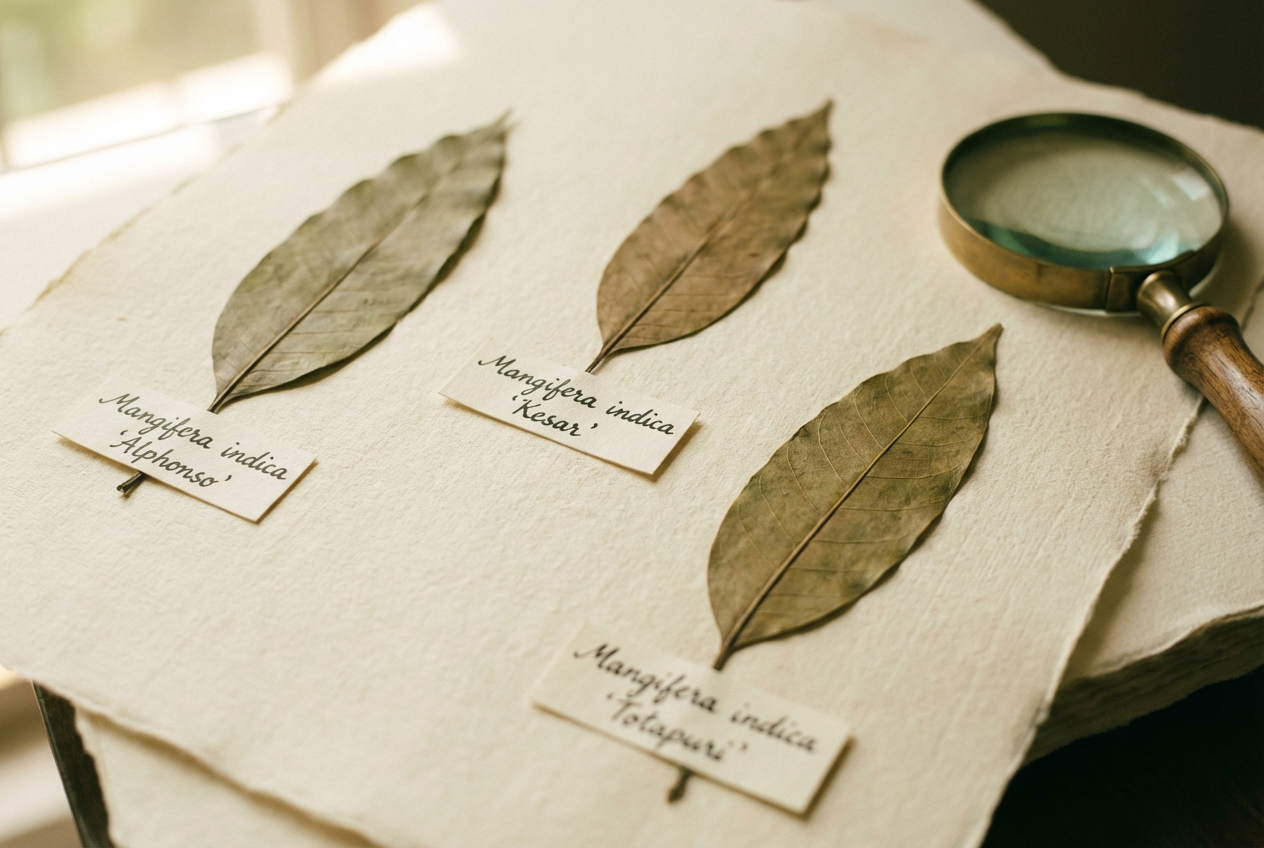
Three pressed mango leaves labeled on khadi paper with a brass magnifying glass
Plate 3.0 · Three leaves, three varieties. Pressed plates, india ink
03of 13
Chapter three · The Library

Twenty-six varieties, across two zones.

Five groups of heritage mangoes in the walking garden; four flagship varieties at density in the precision block. A collection and a production line, planted at once.

The Heritage Garden holds twenty-two varieties at five trees each — a working mango library. North India Royalty anchors the local story; Pusa Hybrids represent the IARI breeding line; West Coast Aristocrats and South India Connoisseur sections bring rare grafts from Ratnagiri, Gir, Hyderabad, Andhra; a Forgotten & Endangered section includes Husn-e-Ara and heirloom Fazli. The Precision Block concentrates on four flagship varieties proven for UHDP: Amrapali, Mallika, Arka Anmol, Pusa Arunima.

Group 1 · North India Royalty

Group 2 · Pusa Hybrids

Group 3 · West Coast Aristocrats

Group 4 · South India Connoisseur

Group 5 · Forgotten & Endangered

Zone B · Precision Block (UHDP)

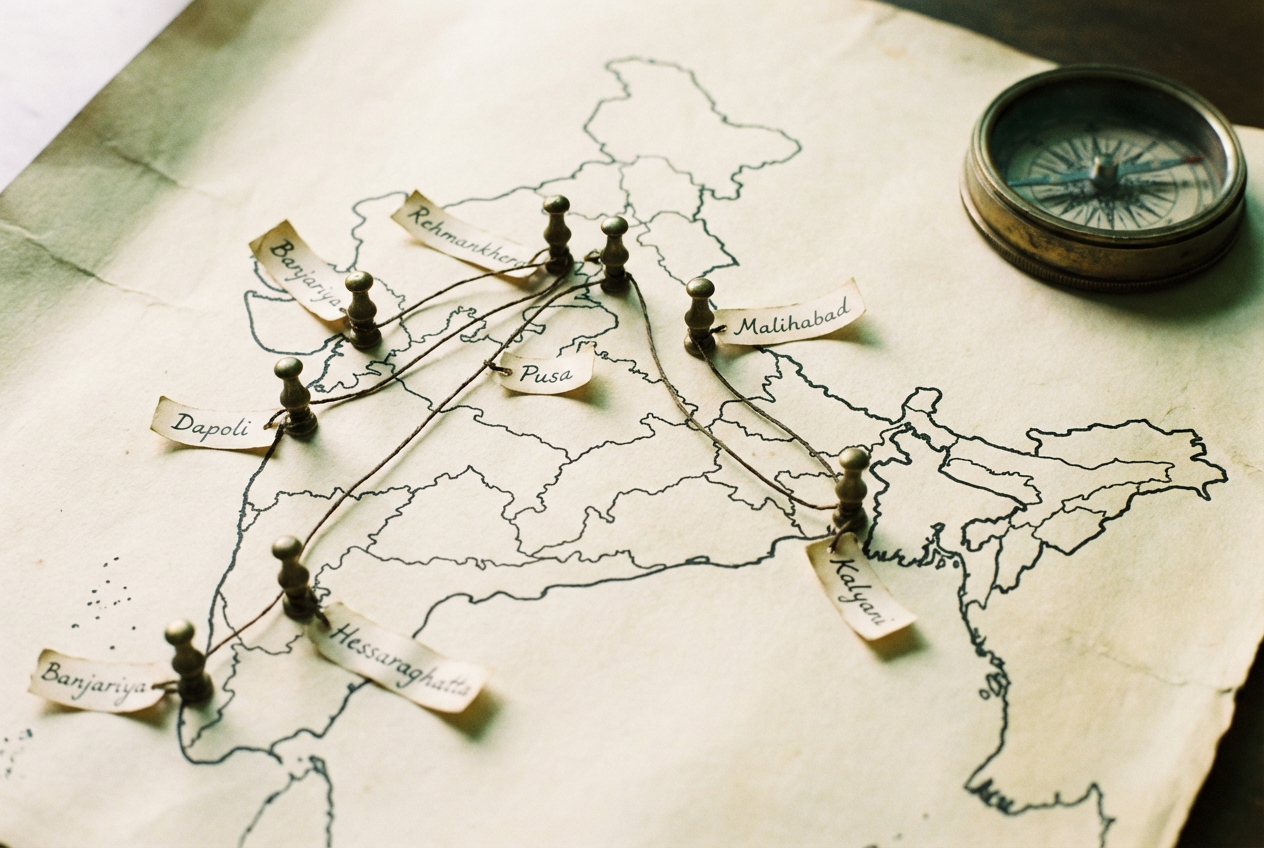
Hand-drawn India map pinned with brass and waxed thread, eleven nursery locations
Plate 4.0 · Eleven pins. Where the saplings come from
04of 13
Chapter four · Sourcing

Where the saplings come from.

Eleven sources spanning Basti, Lucknow, Delhi, Ratnagiri, Bangalore, Kalyani, Malihabad. Public nurseries, private masters, online aggregators.

The bulk of the collection comes from ICAR-CISH Lucknow (CISH-bred Ambika, Arunika, Amrapali, Pusa hybrids), IARI Pusa (Pusa hybrids direct), and the Indo-Israel Centre of Excellence at Banjariya — 16 km away. For regional rarity: Husn-e-Ara from Haji Kaleemullah Khan's Abdullah Nursery in Malihabad (2–3 month pre-book). For Alphonso and west-coast varieties: BSKKV Dapoli. For Arka-series: IIHR Bangalore ATIC. For Bengal heirlooms (Fazli, Himsagar, Kohitur): BCKV Kalyani. All ICAR nurseries follow a 30 June indent deadline — calendared.

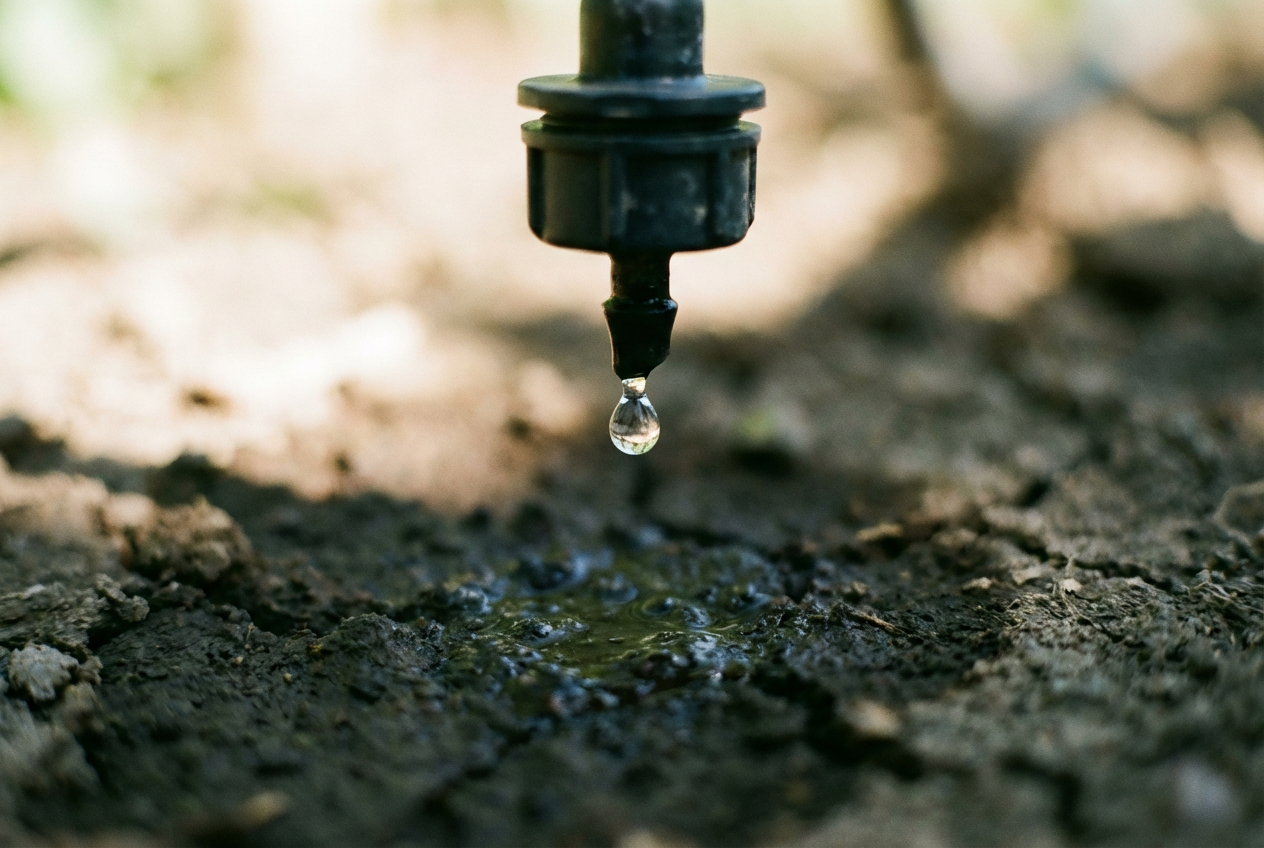
A single drip-irrigation drop suspended over dark alluvial soil
Plate 5.0 · One drop. Drip emitter, black alluvium
05of 13
Chapter five · Infrastructure

The working layer.

Water first. Then canopy. Then packhouse, cold chain, solar. The estate as a machine — understood, before it is made beautiful.

Water & irrigation

A tubewell near the northern edge feeds a 25,000-litre overhead tank at the highest point, gravity-fed to two independent drip-fertigation manifolds — one per zone. Netafim or Jain Irrigation inline drip, venturi injection for water-soluble fertilisers (19:19:19, calcium nitrate, MKP). Tensiometers plus 6–8 electronic soil-moisture sensors feed a small monitoring dashboard visible to visitors. A 400-square-metre HDPE-lined pond at the lowest corner captures monsoon runoff — roughly 600,000 litres of buffer, doubling as a landscape feature.

Canopy & structure

In the Precision Block, trees are trained on a central-leader system for the first three years, capped at 2.5 metres, then converted to open-vase after year three. Post-harvest pruning in June each year removes 15–20% of fruiting wood for renewal. Anti-hail and anti-bird netting (Garware or Tuflex) is an optional phase-two upgrade (~₹3 lakh per acre) — also raises export-grade fruit share. IPM runs through pheromone traps (methyl eugenol for fruit fly) and yellow sticky traps — visitor-visible as a working tech story.

Packhouse & cold chain

A 600-square-foot grading and packing shed, a 200-square-foot cold room at 12–14°C (1–2 ton capacity, Blue Star or Voltas), and a 400-square-foot FSSAI-compliant processing unit for aam papad, pulp, pickle and dried slices. A dispatch bay for Delhivery and DTDC domestic, Shiprocket and Aramex for NRI gifting.

Energy

A 3–5 kW solar rooftop on the packhouse and pavilion powers the cold room and fertigation pump through the day — Tata Power Solar or UPNEDA-empanelled installer, state subsidy ₹15,000/kW available. A 5 kVA diesel backup for outages.
Close-up of mature mango bark
Interlude. Mango bark · monsoon-weathered
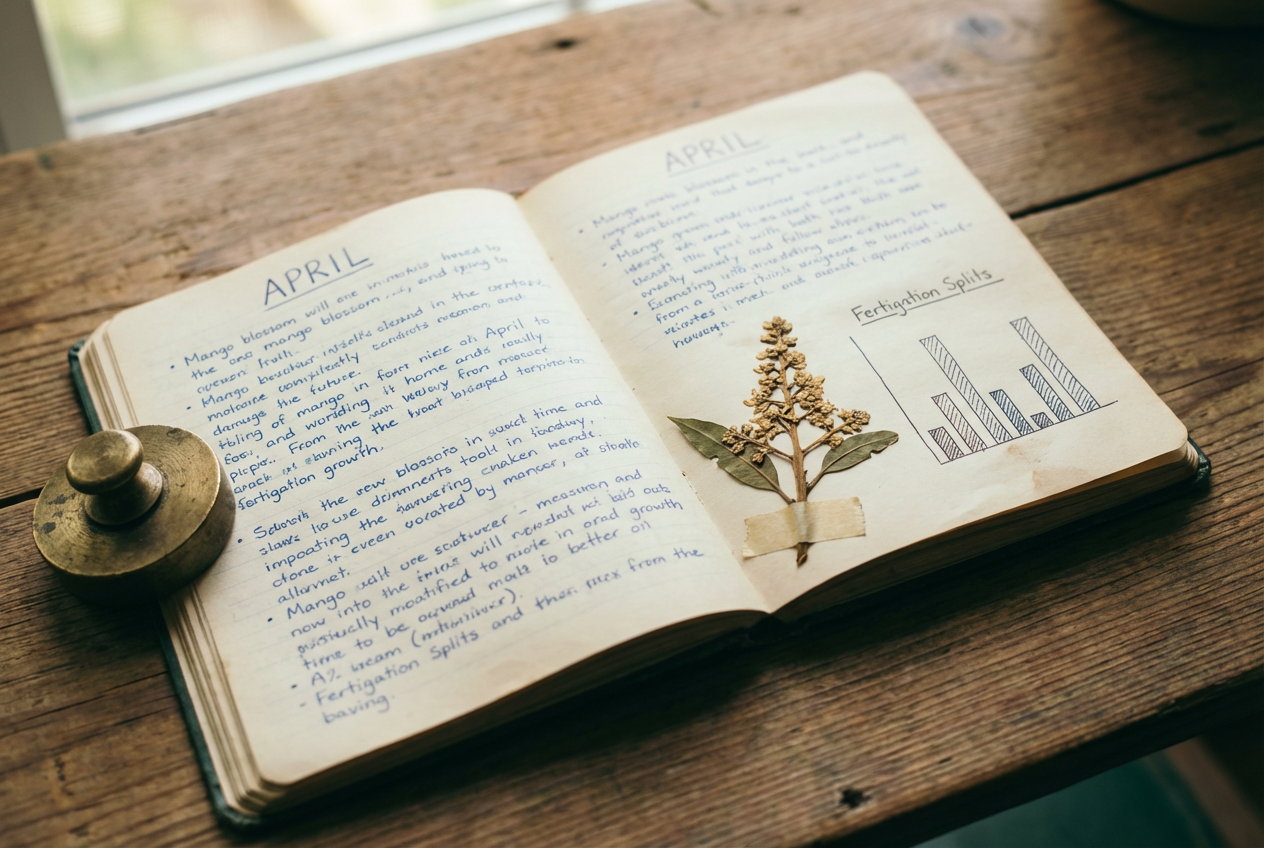
A field notebook open to April, weather notes in fountain pen, pressed mango blossom
Plate 6.0 · The April page. Field notebook, open
06of 13
Chapter six · The Calendar

The orchard year, month by month.

Twelve months of canopy, fertigation, IPM and irrigation decisions — compressed into a single spread. The kisan-facing expansion of each cell lives in Kisan Pathshala.

Table 6.1 · 12-month UHDP operations calendar (mature tree, Y5+)
MonthCanopyFertigationIPMIrrigationFlowering / Harvest
JanNo pruning. Tie down verticals.Hold N. K₂SO₄ 100 g foliar 0.5%.Hopper: Imidacloprid at panicle. Mildew: Hexaconazole 1 ml/L.Withhold — stress for flowering.Panicle emergence. KNO₃ 1% spray if blind wood.
FebRemove crowded panicles.Low N; P 200 g + K 150 g.2nd mildew spray 10–15 d after. Hopper at pea stage.Light drip post fruit-set, 20 L/tree/wk.Full bloom. Avoid sprays at peak.
MarStart N: urea 200 g; Ca(NO₃)₂ 0.5% foliar for retention.Anthracnose: Carbendazim 1 g/L. Mealybug bands check.Drip 30–40 L/tree/wk.Pea → marble. NAA 20 ppm to check drop.
AprN 250 g + K 150 g; B 0.1% + Zn 0.5% foliar.Fruit fly traps: methyl eugenol, 6/acre. Anthracnose 2nd.40–50 L/tree/wk, twice weekly.Fruit development.
MayK heavy 200 g; foliar K 1%.Fruit fly peak — bait spray. Stone weevil prophylactic.50–60 L/tree/wk. Stop 10 d before pick.Pre-harvest.
JunPost-harvest pruning — open centre, cap at 2.5 m, thin 15–20%.FYM 25 kg + neem cake 1 kg + 500:250:250 NPK. 1st split.Bordeaux on cut ends. Copper oxychloride 3 g/L.Deep flood/drip post-pruning 80 L.Harvest Dussehri, Mallika.
JulShape regrowth. Remove water sprouts.2nd NPK split (monsoon onset).Hopper monsoon flush. Gummosis check.Monsoon — stop drip, ensure drainage.
AugTip-prune flush at 4–5 leaves.Leaf webber (neem 5 ml/L). Scale insects.Skip.
SepFinal shaping cuts.3rd NPK split 200:100:100.Hopper pre-flower spray (Thiamethoxam).Resume drip 30 L/wk.
OctStop all pruning.P 250 g + K 200 g basal.Powdery mildew prophylactic S dust.30–40 L/wk.PBZ soil drench (15 Sep ± 1 wk).
NovWithhold N. K foliar.Reduce to 15–20 L/wk.Floral bud differentiation.
DecBud-break monitoring. Alkathene banding for mealybug.Stress — dry.Panicle initiation begins.
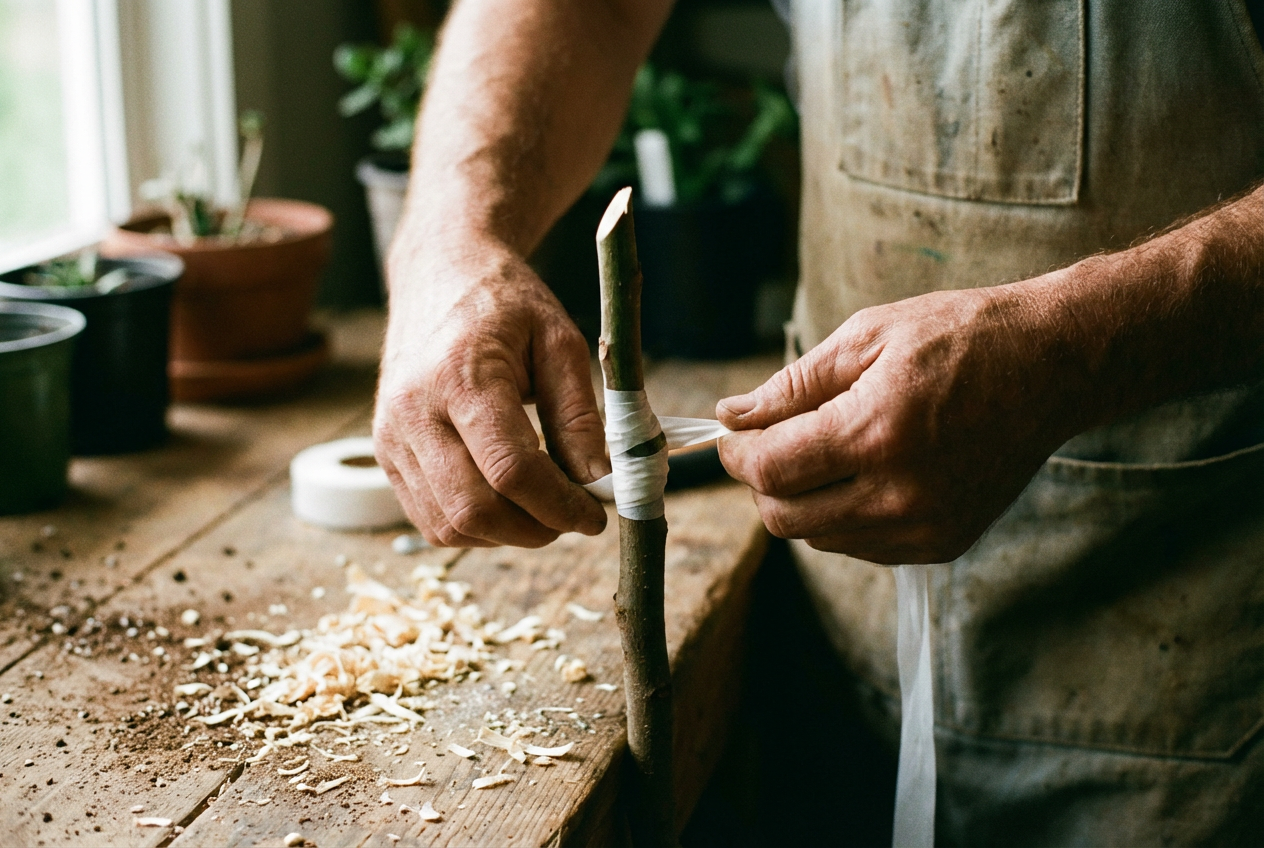
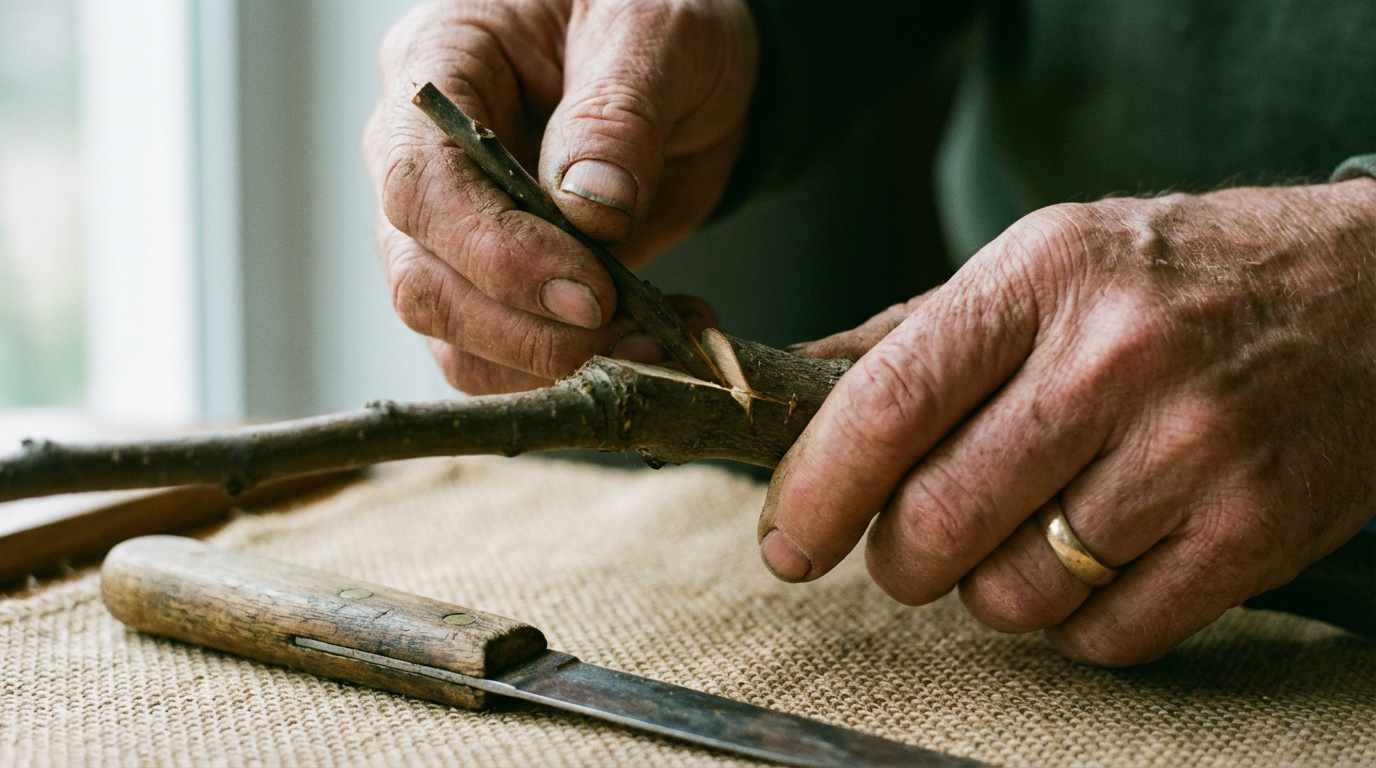
Hands wrapping a cleft graft union with white poly tape
Plate 7.0 · Graft and wrap. The first day of a working tree
07of 13
Chapter seven · Timeline 2026–32+

From research to steady state.

Fifteen months of design and land preparation before a single sapling goes in. Three years from planting to first light harvest. Five years to full production.

Apr – Jul 2026 · now

Phase 0 · Research & Design

  • Soil & water tests — three zones, two depths
  • Topography survey, contour map
  • Horticulture landscape design (CAD)
  • Pre-book rare varieties — 9-month lead for Dapoli, BCKV
  • Brand: lock name, logo, domain (saryu-orchards.com/.in all free)
  • CoE Banjariya formal MoU visit
  • Subsidy pre-registration — PMKSY + MIDH Parry portal
  • Green Credit bare-land baseline registration (closes at planting)
  • FPO membership exploration
Aug 2026 – Feb 2027

Phase 1 · Land Preparation & Infrastructure

  • Land levelling and contouring
  • Water-harvest pond excavation, HDPE lining
  • Perimeter fence and windbreak planting (11-month head start)
  • Tubewell capacity check, 25,000 L tank, drip mainline
  • Green manure rotation — dhaincha → sunhemp
  • Pavilion and packhouse foundation (through monsoon)
  • Solar 5 kW install
  • Content channel soft-launch · Dec 2026
May – Jul 2027

Phase 2 · Planting

  • Pit digging — 1 m × 1 m × 1 m, fill per spec
  • Saplings arrive mid-June, 2-week acclimatisation
  • Plant Zone A · 110 trees × 22 varieties · traditional 10 × 10 m
  • Plant Zone B UHDP · 3 × 2 m · ~1,340 trees × 4 varieties
  • Mango Day Zero launch event
2027 – 2030

Phase 3 · Establishment

  • Y1–2 canopy training · single leader → open vase
  • Intercrop legumes/veg for interim income
  • First PBZ application · Sep Y3
  • First light harvest 2030 · Amrapali UHDP precocious
  • DTC soft launch
2031 – 2032+

Phase 4 · Full Production

  • Y4 serious commercial harvest · ₹25–35 lakh
  • Experiences fully operational
  • Y5+ steady state · ₹60–90 lakh
  • Mother-block ready for sapling sales (Phase 3 scope unlock)
  • Export via APEDA-registered FPO
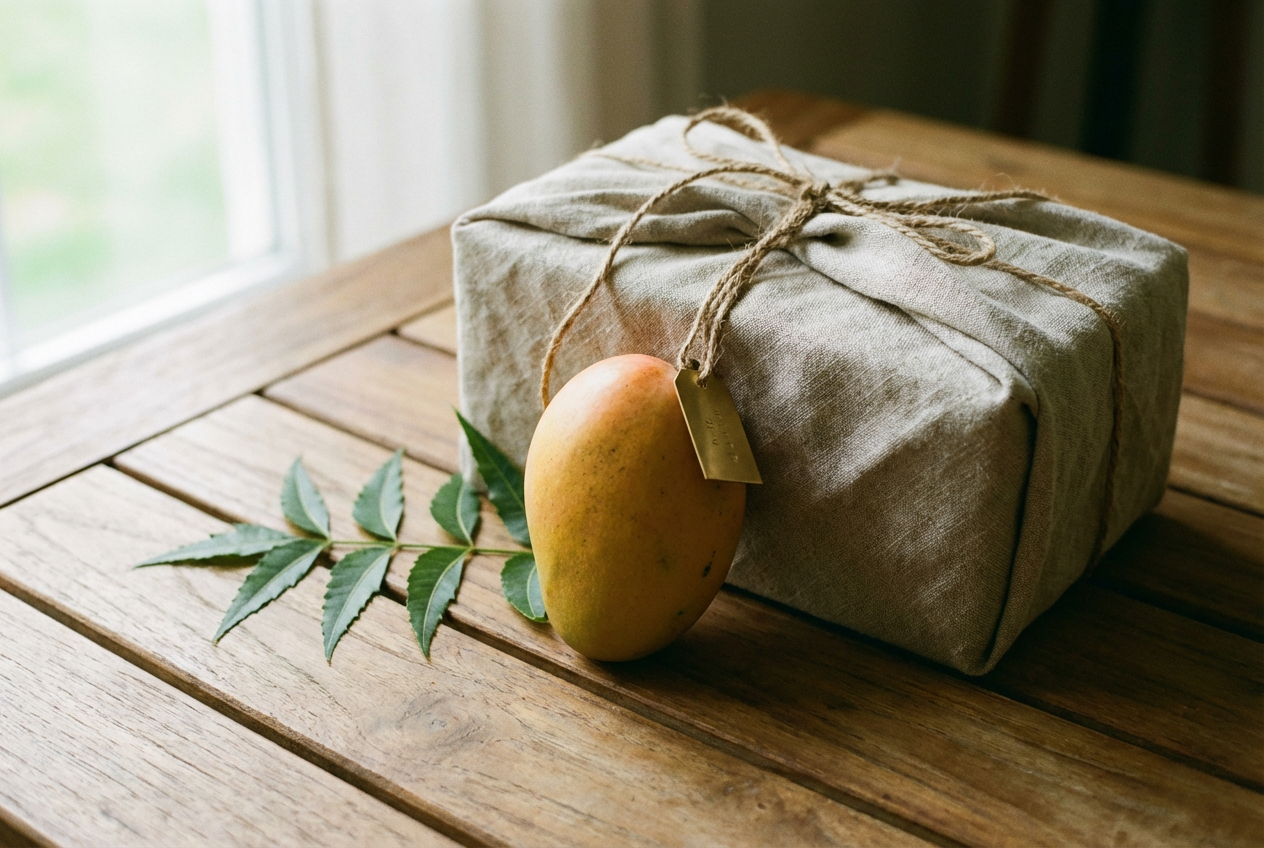
A linen-wrapped gift box tied with jute twine, brass tag, mango visible
Plate 8.0 · The gift, tied. Linen, jute, brass
08of 13
Chapter eight · Brand & Experience

An estate brand, not a produce label.

Saryu Orchards — an orchard estate on the plains of Ayodhya. Twenty-two heritage mangoes, Israeli precision, one story of fruit.

Revenue comes from four legs: fresh (DTC gift boxes May–August), processed (aam papad, pulp, pickle, dried slices, year-round), experience (walks, harvest weekends, adopt-a-tree, HNI private visits, annual Mango Day), and content (weekly YouTube, daily Instagram, monthly newsletter). Saplings become a fifth leg from Year 4, when the mother-block matures.

Experiences

01

The Walk

Guided 90-minute tour through Heritage Garden, Precision Block, packhouse, tasting pavilion. 8 slots/day × 6 people max. Apr–Aug peak.

₹500 / person
02

Harvest Weekends

Half-day including picking + chef-led tasting of 8 varieties + lunch. Jun–Jul. 4 weekends × 2 batches.

₹2,500 / person
03

Adopt a Tree

Zone A only. 22 varieties × 5 trees = 110 adoptable. Adopter receives all fruit from that tree, name plaque, 2 annual visits.

₹15,000 / tree / yr
04

HNI private visits

By appointment. Curated tasting + single-origin gift hamper.

₹10,000 min
05

Mango Day

Annual invite-only event in July. Food writers, chefs, agri officials, 50–100 guests. PR anchor.

Invite only

Product SKUs

A

DTC fresh-fruit gift boxes

3 kg / 5 kg multi-variety boxes. Delhivery / DTDC domestic. Shiprocket / Aramex international (NRI).

May–Aug
B

Aam papad · pulp · pickle · dried slices

FSSAI-compliant processing unit. Small-batch. Year-round revenue.

Year-round
C

Honey (4 hives)

Pollination-support hives double as a premium SKU. ~200 kg / year.

Year-round
D

Rare-variety grafts

From mother-block, Year 4+. Online + walk-in.

Y4+
Water-harvest pond surface at dawn
Interlude. The pond · dawn · 600,000 L buffer
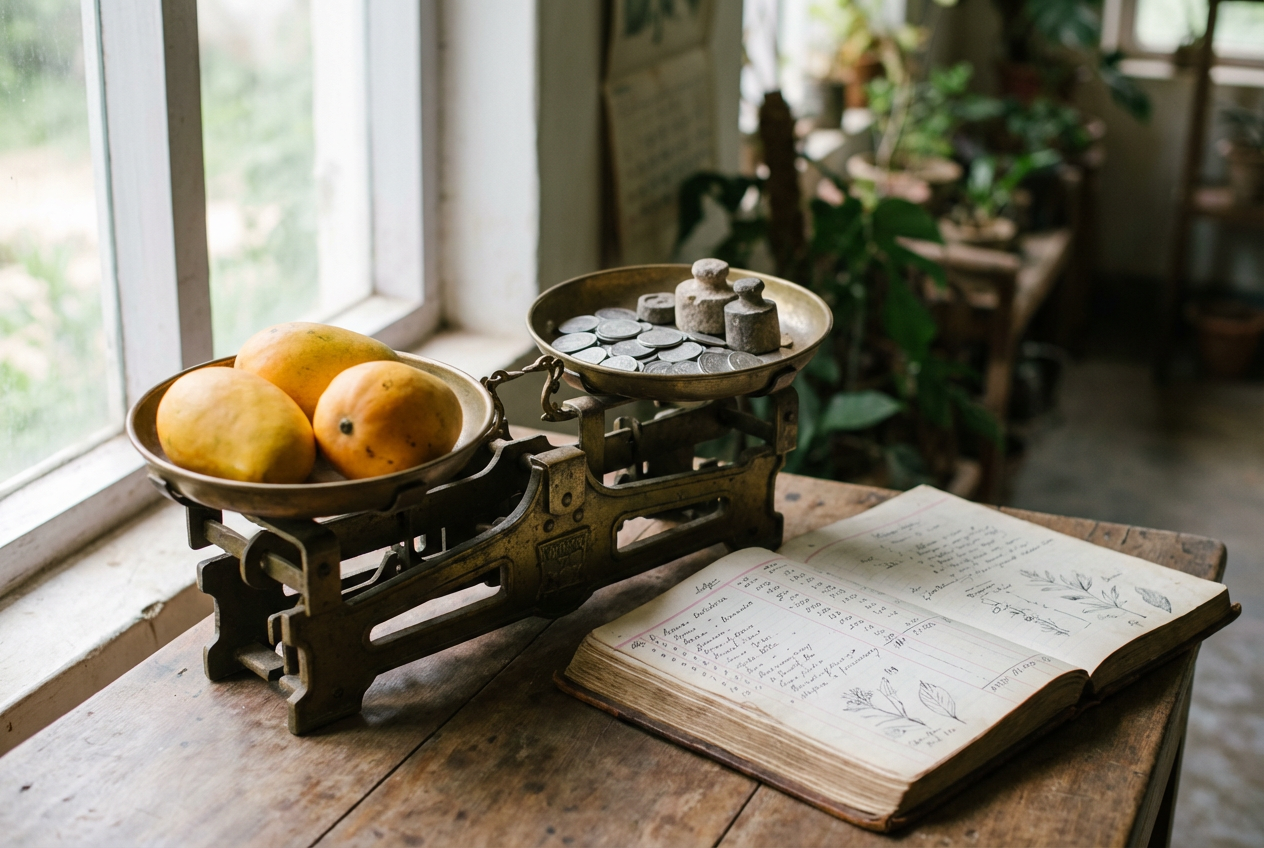
A brass two-pan balance with stone weights, mangoes in one pan, silver coins in the other
Plate 9.0 · Mangoes against coins. Brass balance, stone weights
09of 13
Chapter nine · Economics

What the project costs, what it returns.

₹55–75 lakh capex over 18 months. ₹6–8 lakh annual opex for the first three years. First serious revenue in Year 4. Steady state ₹60–90 lakh from 2032.

Capex breakdown · ₹ lakh

Indicative. Contingency 5–7 ₹ lakh included separately. Figures assume no subsidy; PMKSY can offset drip 55%, MIDH 40% of HDP cost norm.

Revenue ramp · ₹ lakh / year

Stacked: operational income (intercrop + content seed) · fresh fruit · experiences · content monetisation. First fruit Y3 (2030); full production 2032.

A stamped paper document with red government ink-stamp and a blue fountain pen
Plate 10.0 · The stamp and the pen. Pre-approval is everything
10of 13
Chapter ten · Subsidies Playbook

Eight schemes, ranked by priority.

Apply before planting. Source saplings only from NHB-accredited nurseries. Pre-approval is the single most common rejection cause.

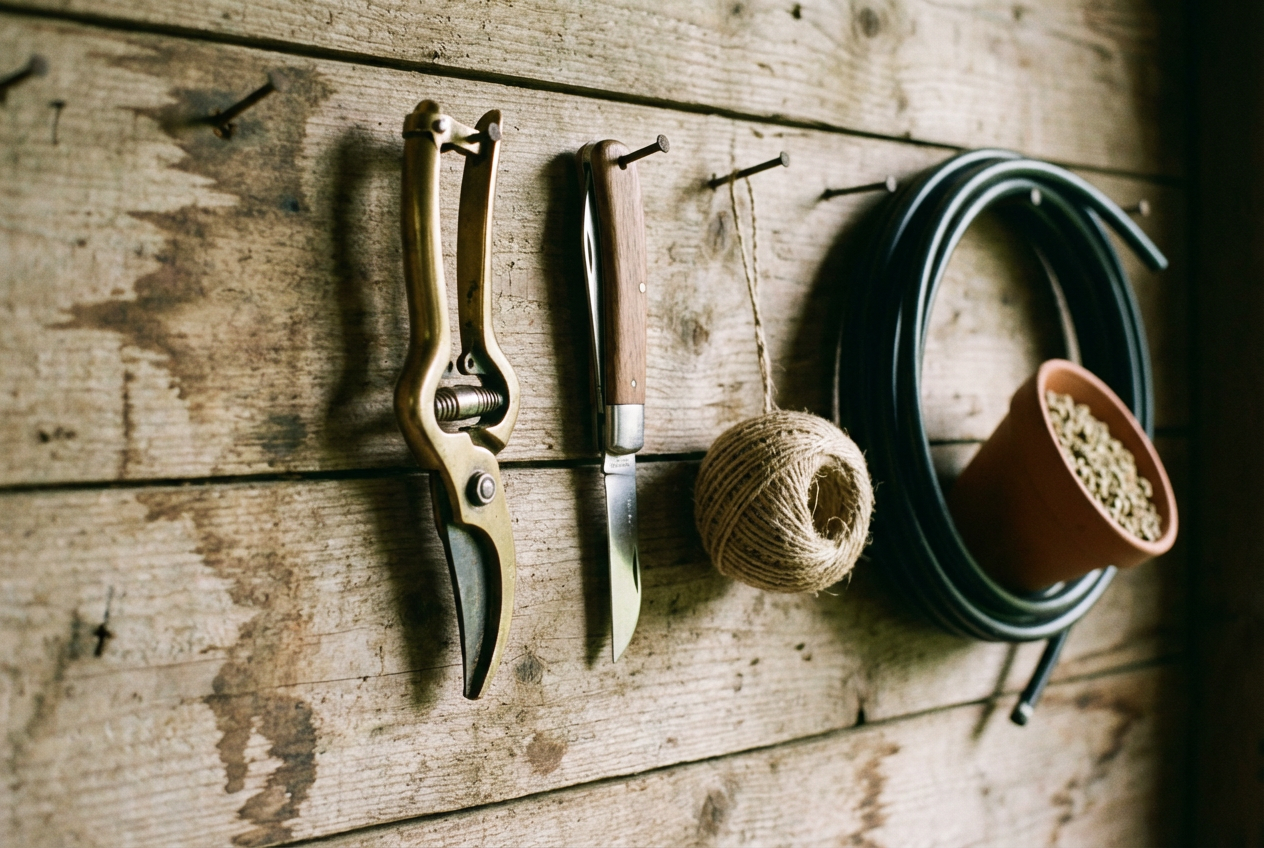
A wooden tool wall — secateurs, graft knife, jute string, drip tubing, clay pot of neem cake
Plate 11.0 · Tools of the trade. Brass, steel, jute, clay
11of 13
Chapter eleven · Vendors

Who to call, and what it costs.

Nine capex categories. Three to five quotes per category. Priced 2026 indicative. Verify with live quote before committing.

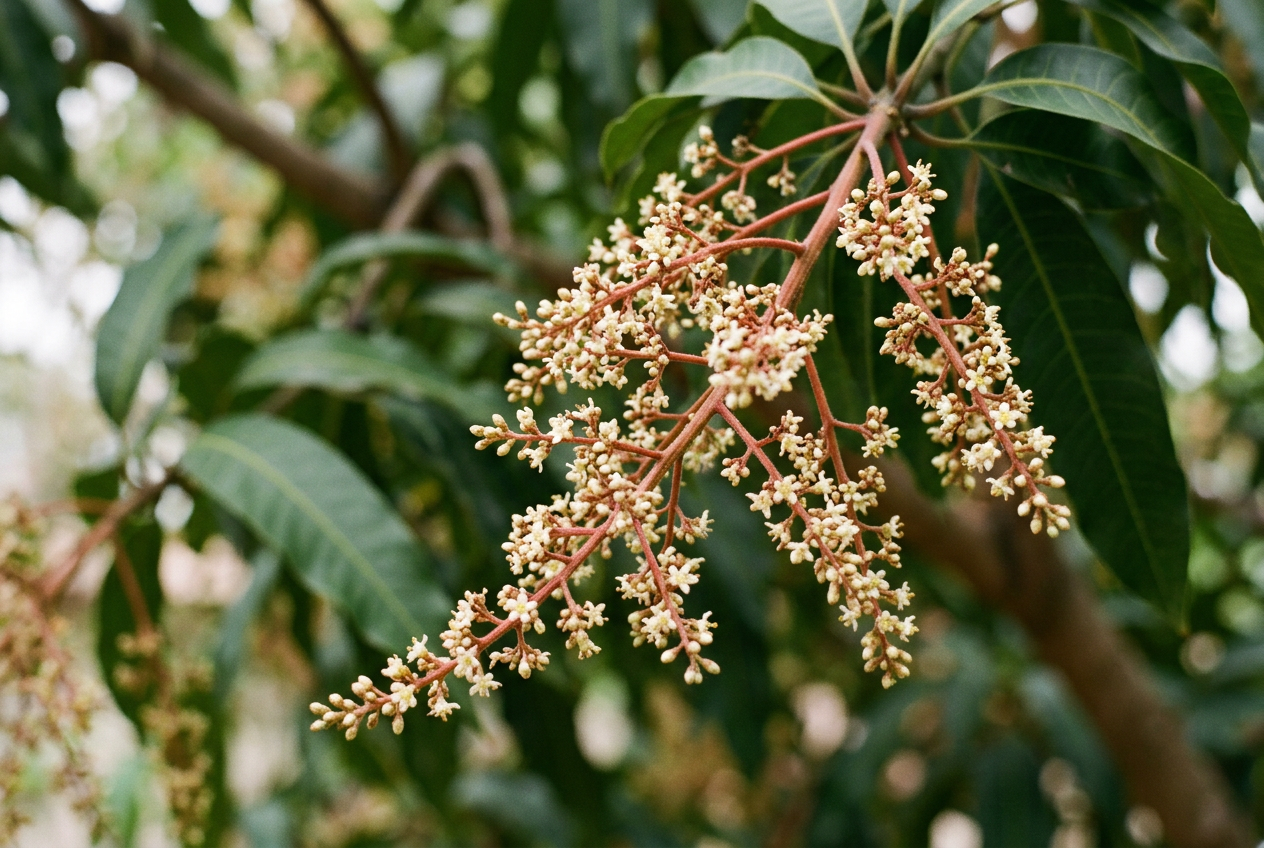
Mango flower panicle in full bloom
Interlude. The bloom · mid-February · panicle in full open
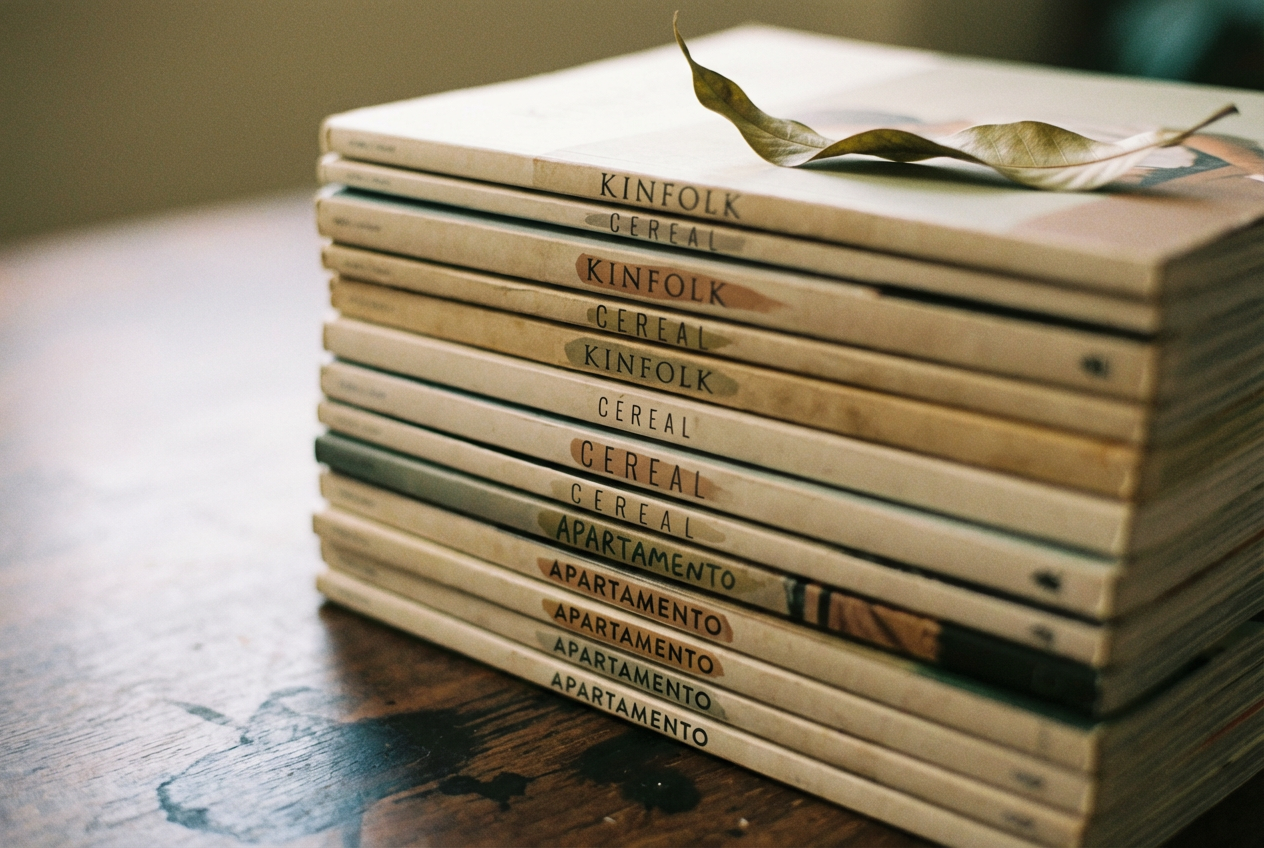
A stack of magazines seen spine-on, dried mango-leaf bookmark
Plate 12.0 · Spines and bookmarks. Magazines read, learnings taken
12of 13
Chapter twelve · Reference Estates

What the market looks like, and where the gap is.

Twelve estates benchmarked — Indian and international. Tree-Lease + Farm Stay + Gift Box + Experiences is the winning stack. Character beats scale. ₹1,200–1,500 is the online DTC price ceiling.

Chapter thirteen · For the farmer

किसान पाठशालाKisan Pathshala

Twelve visual modules. बिना जटिल शब्दों के. In plain Hindi and English, with pictures that do the teaching. Each module is a sequence you can watch, not just read.

Hands demonstrating a cleft graft, rootstock and scion visible
Plate 13.0 · The lesson, in two hands. Cleft graft demonstration

Every module is a sequence of 6–9 frames composed in a consistent visual language — the same hands, the same surface, the same light. This consistency is deliberate: the same frames will be stitched into instructional videos using Hyperframes with a native Hindi voice-over. The site is the picture book; the videos are the lesson.